Real people. Real barriers. Real homes.
Accessible housing isn't a niche. It's the reality for tens of millions of Americans who've been left out of a housing market that was never built with them in mind. Here's who we build for — and how.
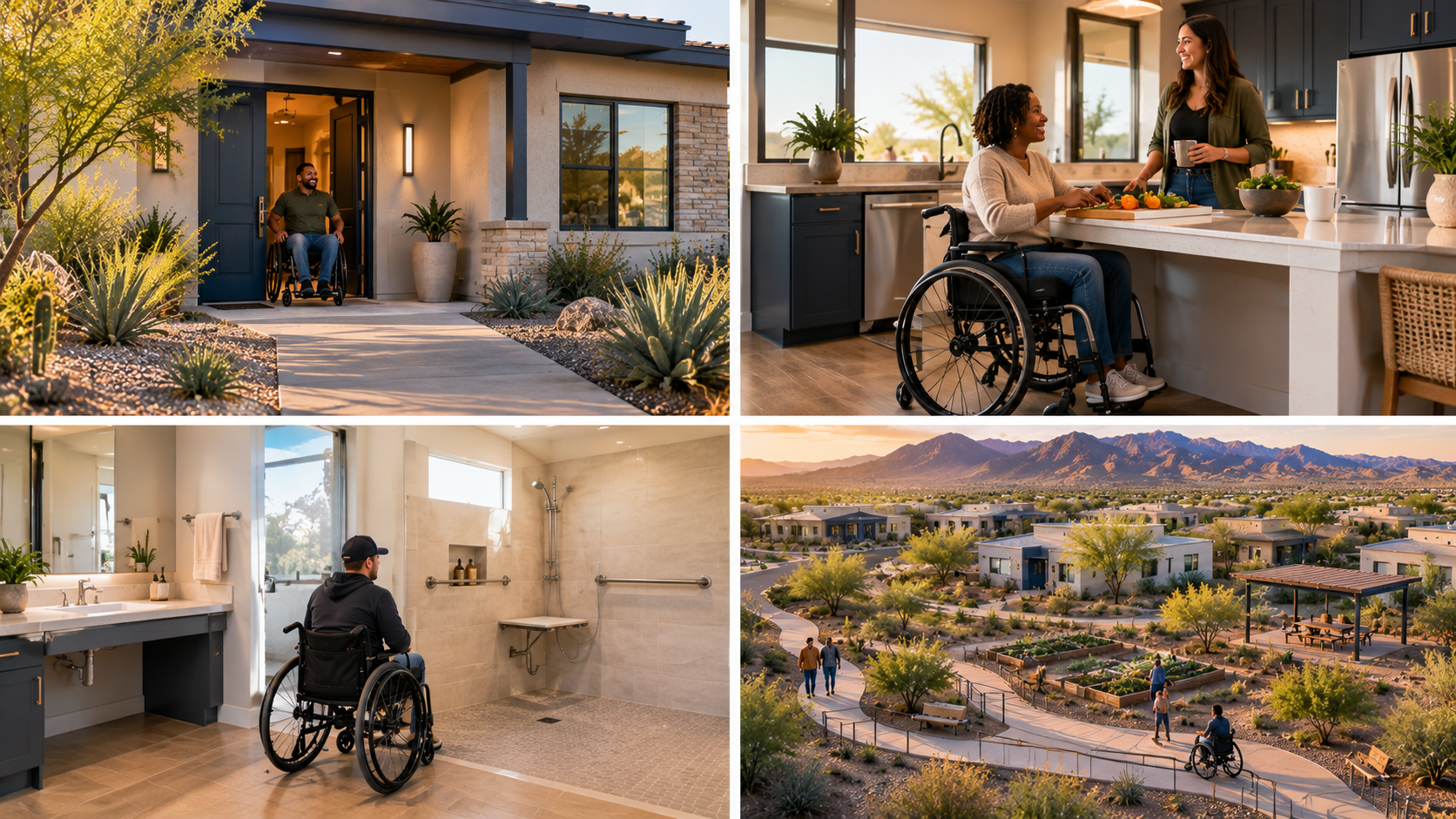
Wheelchair users, amputees, individuals with limited mobility, chronic pain, or progressive conditions.
The barrier: Less than 1% of U.S. homes are wheelchair accessible. Most rentals are illegal to modify. Most listings labeled "accessible" have one grab bar and a ramp bolted to the porch.
How we serve: Ground-up accessible homes with roll-in showers, roll-under counters, 36" doorways, no-step entries, and smart home controls. Nothing bolted on. Everything built in.
Adults with autism, Down syndrome, intellectual disabilities, TBI, and other cognitive conditions — especially those transitioning out of family homes.
The barrier: Many families age out of caregiving before their loved one has a viable independent living option. Group homes have long waitlists and vary wildly in quality.
How we serve: Co-living homes with private en-suite bedrooms, shared common spaces, and support-service compatibility. Homes that promote independence without isolation.
Boomers, empty-nesters, and older adults who want to stay in their homes as long as possible — not move into a facility.
The barrier: 10,000 Americans turn 65 every day. Most existing housing stock won't accommodate the mobility changes that come with aging. Assisted living runs $6K–$9K/month.
How we serve: Single-story homes designed to age with the resident. Smart home tech. Universal Design so nothing feels "adaptive" — just comfortable, forever.
Service-connected disabled veterans, aging veterans, and veterans in transition — especially those navigating VA housing programs.
The barrier: Roughly 1 in 4 post-9/11 veterans has a service-connected disability. Finding a landlord who understands SAH grants, HISA programs, or HUD-VASH vouchers is a full-time job on its own.
How we serve: Homes designed for VA landlord programs. Coordinated with Paralyzed Veterans of America and local VSOs. Built to accommodate service-connected disabilities and SAH grant standards.
Parents, adult children, siblings, and spouses navigating housing for someone they love.
The barrier: The stress of caregiving compounds when you can't find anyone building the housing your family member actually needs. Most operators talk to funders, not families.
How we serve: We answer the phone. We share drawings, specs, and pricing openly. We walk families through the option that fits — even when that option isn't ours.
DDD case managers, occupational therapists, disability advocates, VA landlord program coordinators, Padmission and HOM Inc partners.
The barrier: Referral partners have long lists of people who need housing and short lists of operators they can actually recommend without reservation.
How we serve: Direct communication, transparent process, ADA + Fair Housing baked in from day one. A partner you can put your reputation behind.
Roughly 1 in 4 post-9/11 veterans has a service-connected disability. Assisted living averages $6K–$9K/month. And most of the housing being built today doesn't work for any of them.
Resident. Family. Case manager. Referral partner. Advocate. Whoever you are — the door is open.